The story
Freelance Writer Seeks Forever Home for Portfolio
Three portfolio moves in five years taught a freelance journalist client of mine what was actually worth paying for, and it wasn't the cheapest plan.
By Elena Novak, WordPress & Managed Editor · 6 min read
·
Disclosure: Some links on this page are affiliate links — if you sign up through one, we may earn a commission at no extra cost to you. It never changes our ratings, rankings or verdicts: we don't sell hosting and take no pay-for-placement.
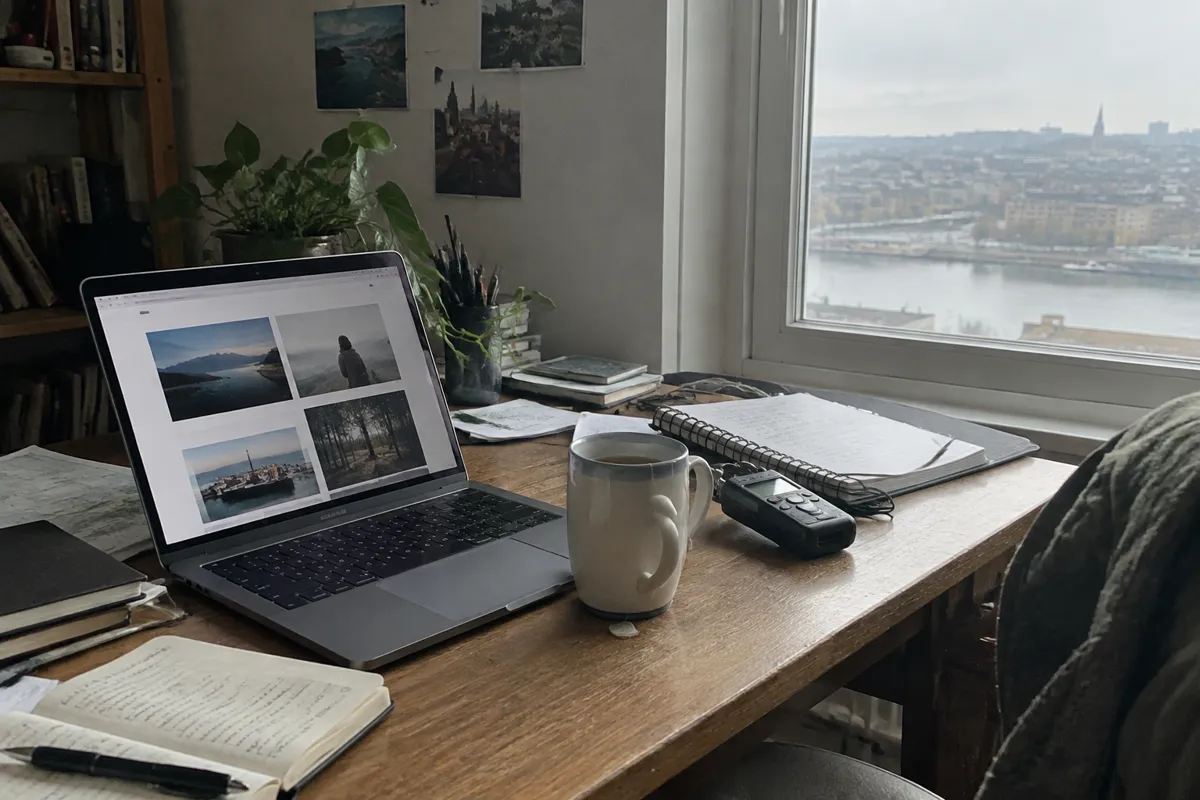
One of my clients is a freelance journalist. Features, the odd long read, a lot of local reporting. Her portfolio is the one thing that proves she exists when an editor she’s never met asks, “Do you have clips?”
When she first came to me, she told me she’d moved that portfolio three times in five years, and she said it the way people confess to a bad habit. She treated it, she admitted, like a pair of trainers she kept swapping for a cheaper pair. I’ve built her current site, and I’ve heard the whole story over a lot of coffee. Here’s how it went.
Move one, the bargain
Her first portfolio went up on a shared plan that cost less than her monthly coffee habit. It was fine. Pages loaded, her clips sat in neat rows, and she felt very professional. Then the renewal hit at roughly four times the intro price, and she did what she always did when money was tight. She went looking for something cheaper.
She found it, and she moved. It took a whole weekend. She exported her pages, rebuilt a few that didn’t survive the trip, and told herself this was a one-off.

Move two, the glossy builder
A year later she got talked into a drag and drop builder. Everyone in her freelancer group was raving about it. It looked lovely. It was also the moment she learned her portfolio was no longer really hers.
When she tried to leave eighteen months later, there was no proper export. Her articles, her images, her carefully written bios, all sitting inside a system that would happily display them but would not hand them back in a usable form. She copied and pasted about ninety pieces by hand. Ninety. She counted, because she was quietly furious.
As someone who hand codes sites, I felt that one in my bones. I remember being new to all this and discovering that a platform I’d trusted held my work in a shape I couldn’t carry away. It’s a lonely feeling.
Where it went wrong
The premise she’d been working from was that a portfolio is a disposable thing, something you can rebuild whenever a better deal comes along. That was wrong. A portfolio is the slow accumulation of links, search history and trust. Every time she moved, she broke old URLs that editors had bookmarked. Two commissions she knows of went to someone else because her link showed an error page.
The real cost of each cheap move was never the price difference. It was the weekend, the lost links and the quiet damage to her reputation while the dust settled.
The third move, and the one she meant
By the time she called me, she was done with bargains. We sat down with a notepad instead of a comparison table. I asked one question of every option: if you want to leave in five years, how easy is it?
That changed everything. Suddenly the shiny features mattered less than boring answers. Can she export everything in a standard format? Is the renewal price printed plainly? Are backups included, and can she download one herself? Is her domain registered somewhere independent of the hosting?
The last one was the lightbulb. She’d always let each host register her domain as a freebie, which meant each time she left, she had to untangle the domain as well. This time we registered it separately, pointed it at the new host, and she felt the little click of owning her own front door.
What she finally decided to pay for
She ended up on a plan that costs about three times her first bargain. She’s stopped flinching at that, because of what the extra money buys.
Daily backups she can download. A renewal price that is the same as the signup price, or close to it. A plain export button. And support that answered her pre-purchase question with a real sentence rather than a link to a sales page.
She didn’t pay for speed boosts, fancy analytics or a bundle of extras she’d never touch. Most of those add up to padding.
It has been two and a half years. No moves, no broken links, no weekends lost. Her old clips still load from the same addresses they always did, and when an editor asks for samples she sends one link and doesn’t think about it again.

A few things I’d tell you
- Treat your portfolio as a long-term asset. Choose the host you could live with for five years, not the one that wins this month.
- Register your domain separately. It costs little and it means you can always leave cleanly.
- Test the exit before you commit. Ask how export works. If the answer is vague, you have your answer.
- Keep your own copy of everything. A folder of your work on your own computer is the cheapest insurance there is.
- Expect to pay a bit more than the banner price. Fair and predictable is the goal, not rock bottom.
She still loves a bargain, she tells me. She just doesn’t buy one for the thing that speaks for her when she’s not in the room.
To sum it up
- A portfolio is a long-term asset, so judge the host on the next five years, not the first month.
- Keep your domain registered separately from your hosting so moving never holds your name hostage.
- Pay for the things that protect your work: backups, a fair renewal price and an easy export.
- Every move costs time and broken links. Boring and stable beats bargain and exciting.