How to Host Your Own Website: A Beginner's Step-by-Step Guide

WordPress & Managed Editor
Disclosure: Some links on this page are affiliate links — if you sign up through one, we may earn a commission at no extra cost to you. It never changes our ratings, rankings or verdicts: we don't sell hosting and take no pay-for-placement.
Who it's for
- First-time website owners
- Small business owners setting up their own site
- Bloggers and hobbyists moving off a website builder
- Students and career-changers learning how the web works
Recommended hosts
Four Beginner-Friendly Hosts to Start With
If you would rather skip the reading and get going, these four are well-known, beginner-oriented hosts ranked by verified Trustpilot rating.
How this is ranked.Ranked by independently verified Trustpilot ratings, checked as of Oct 2026. We don't sell hosting and take no placement fees.
Disclosure. Some links below may be affiliate links — if you sign up through them we may earn a commission at no extra cost to you. It never affects the order. Intro prices are promotional; check the renewal price at checkout.
SiteGround
From $2.99/mo
renews steeply (~$17.99/mo)
Trustpilot · 30,894 reviews · as of 2026-10-01
SiteGround is a performance-first host with the highest verified rating in our set (4.9/5 from 30,210 Trustpilot reviews). It suits growing WordPress and WooCommerce owners who value speed, top-rated support and reliable uptime over the lowest price. The catch is cost — intro pricing is competitive, but the renewal is one of the harshest jumps (around $17.99/mo), and entry plans have low storage caps.
Hosting types
Key services
- Runs on Google Cloud infrastructure
- In-house SG Optimizer caching and Ultrafast PHP
- Daily backups included
- Staging environments on higher tiers

Hostinger
From $1.99/mo
renews substantially higher (~$10.99/mo shared)
Trustpilot · 72,700 reviews · as of 2026-10-01
Hostinger suits beginners, personal sites and small businesses chasing the lowest cost of entry, and it holds the largest review base in our set (4.7/5 from 71,365 Trustpilot reviews). Its standout is value — among the cheapest credible intro prices, with LiteSpeed and NVMe performance for the money. The trade-off is a big jump from intro to renewal (around $10.99/mo shared), and the lowest rates need a long up-front prepayment.
Hosting types
Key services
- hPanel custom control panel aimed at beginners
- Free SSL and email on most plans
- LiteSpeed web server and NVMe storage on many plans
- Bundled AI website and site-building tools
DreamHost
From $2.89/mo
renews higher (~$10.99/mo shared)
Trustpilot · 8,225 reviews · as of 2026-10-01
DreamHost is a privacy-focused, independently-owned host that suits WordPress sites wanting flexible billing, rating 4.6/5 across 8,145 Trustpilot reviews. Its standouts are the industry-longest 97-day money-back guarantee and an unusual month-to-month billing option, plus a WordPress.org recommendation. The trade-offs are a custom control panel (no cPanel) with a learning curve, no live phone support by default, and renewal rates that rise sharply from intro.
Hosting types
Key services
- Month-to-month billing option available (unusual)
- Industry-longest 97-day money-back guarantee
- Free domain and privacy
- Custom in-house control panel
Bluehost
From $2.95/mo
renews higher (~$8.99/mo shared basic)
Trustpilot · 31,800 reviews · as of 2026-10-01
Bluehost is a mainstream, WordPress.org-recommended host aimed at WordPress beginners and small businesses, rating 4.5/5 across 31,280 Trustpilot reviews. Its strengths are beginner-friendly onboarding, a free first-year domain and frequently-praised 24/7 support. The catch is cost after the intro term — renewals climb (around $8.99/mo shared basic), checkout pushes upsells, and some reviews mention cancellation and refund friction.
Hosting types
Key services
- Officially recommended by WordPress.org
- Free domain for the first year
- Free SSL and CDN
- One-click WordPress install

By Elena Novak, WordPress & Managed Editor
Hosting your own website sounds like a job for someone with a computer science degree and a rack of servers in the garage. It is not. In practice it means renting a small amount of space on a well-run computer, pointing a web address at it, and putting your pages there. People do it in an afternoon, and most of the difficulty comes from unfamiliar vocabulary rather than from anything genuinely hard.
This guide walks you through the whole thing in plain English: what you actually need, how the pieces fit together, which type of hosting to choose for a first site, how to pick a good provider without getting caught by the usual traps, and the step-by-step process of getting from nothing to a live, secure, backed-up website. It also covers speed, common beginner mistakes, what you should expect to pay, and the small amount of maintenance a healthy site needs. Where a topic deserves more depth, we link to a dedicated page so you can dig in when you are ready.
A note on how we approach this. We are a ranking-only reference: we do not sell hosting, and we cite third-party ratings rather than invent our own. Some links to hosts on this page may be affiliate links, which means we may earn a commission if you sign up, at no extra cost to you. That never changes the order in which hosts appear. It is set by verified Trustpilot ratings, and we tell you the date those ratings were checked.
In this guide: what hosting is · domain vs hosting · hosting types · choosing a host · step-by-step setup · speed · mistakes · costs · maintenance
What Does It Mean to Host Your Own Website?
Every website is, at bottom, a collection of files: pages, images, stylesheets, and often a database that holds things like blog posts and user comments. Those files have to live on a computer that is switched on and connected to the internet all day, every day, so that anyone who types your address into a browser can be handed the right page within a second or two. That computer is called a web server, and the service of renting space and running time on one is called web hosting.
When people say “host your own website” they usually mean one of two things. The first, and by far the most common, is buying a hosting plan from a hosting company: you rent a slice of a professionally run server, and the company takes care of the hardware, the power, the cooling, the network connections, the security patches on the machine itself, and the monitoring. You look after your own site’s content. The second meaning is literally running the server yourself, at home or in an office, sometimes called self-hosting. That is a legitimate hobby and a great way to learn, but it is the wrong starting point for a website you want visitors to rely on. Your home internet connection can drop, your IP address can change, your electricity can fail, and you become the person responsible for defending a machine that is exposed to the whole internet. For a first website, rent a plan from a hosting company and save the home server for later.
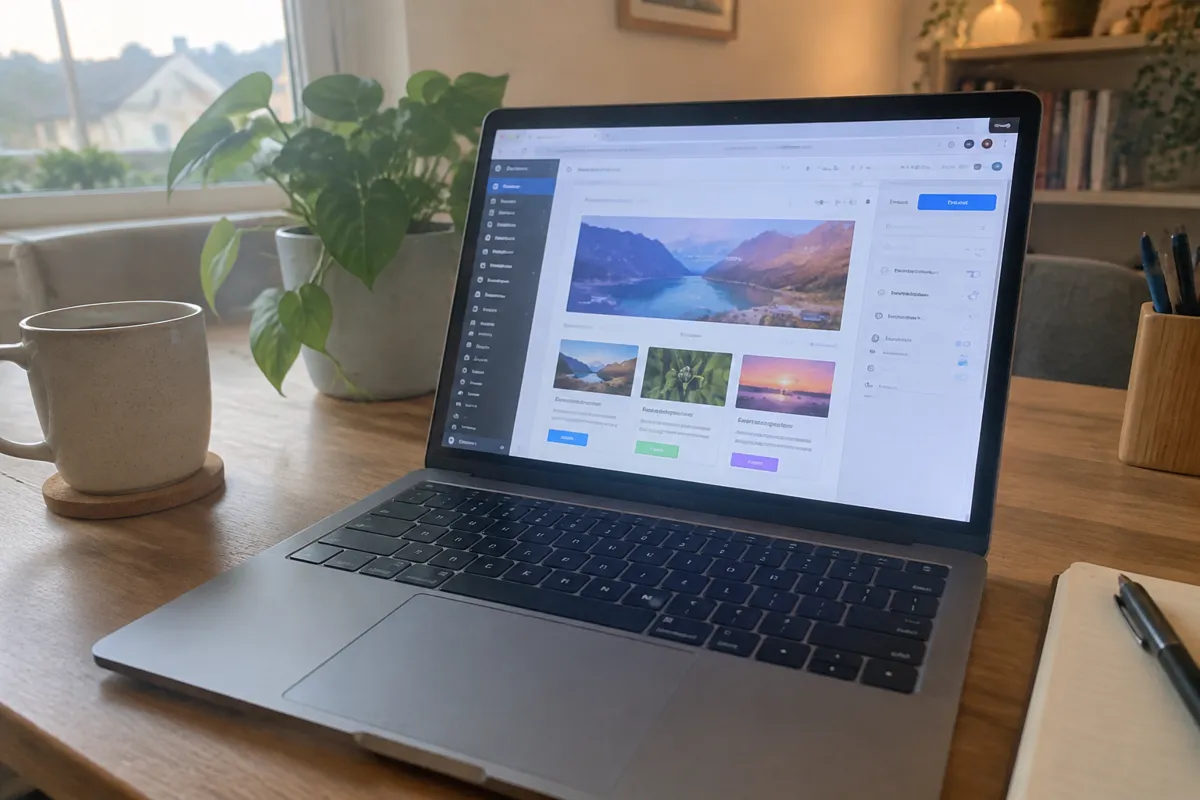
If you would like the deeper background on what happens between a visitor’s click and your page appearing, see how web hosting works and what is web hosting. For the purposes of this guide, the mental model is simple: your website is a shop, your domain is the street address, and hosting is the building. You need all three before customers can walk in.
What You Actually Need to Get Started
The list is shorter than beginners expect. To host your own website you need:
- A domain name. The address people type, such as
yourbusiness.com. You register it for a set period, usually a year at a time. - A hosting plan. The rented server space that stores your files and serves them to visitors.
- Something to put on the site. Either a content management system such as WordPress, a website builder’s exported files, or hand-written HTML pages.
- A way to connect the domain to the hosting. This is done through DNS settings, and it is usually a copy-and-paste job that takes a few minutes.
- A payment method and an email address for the account. Use an email address you will still control in five years, because domain renewal reminders and security notices go there.
What you do not need: expensive software, a computer science background, a static IP address, a separate email server, or a “dedicated” anything. A modern laptop, a browser and a couple of hours are enough.

Domain Name vs Web Hosting: Two Things You Need
This is the single most misunderstood point for first-timers, and getting it clear saves real money and confusion. A domain name and a hosting plan are two different products that do two different jobs.
A domain name is an address. It is a human-friendly label, such as example.com, that points browsers toward the right server. You do not really “own” a domain the way you own a laptop; you register it for a term (typically one to ten years) and can renew it. Domains are sold by companies called registrars, and the price is usually a modest yearly fee. If you would like the full explanation, what is a domain name and domain vs hosting go deeper.
Web hosting is the space and computing power that actually holds your site. Without it, your domain points at nothing. Without a domain, your hosted site is reachable only by a long technical address that no visitor would remember.
The link between them is DNS, the Domain Name System, which acts as the internet’s address book. When someone types your domain, DNS looks up which server holds your site and sends the browser there. Setting up your website means telling DNS where your hosting lives. If that sounds abstract, what is DNS explains it gently, and point a domain to hosting gives the practical steps.
Should You Buy the Domain and Hosting Together or Separately?
Both approaches work, and each has a real advantage.

Buying together from your host is the simplest. The connection between domain and hosting is often made automatically, so there is less to configure. Some hosts include a free domain for the first year on longer plans. The caution is that “free” domains are usually free only for the first term and renew at the standard price, and some hosts treat the domain as tied to your hosting account, which can make leaving harder.
Buying separately from a dedicated registrar keeps your domain independent of your host. If you ever change hosts, your domain stays put, and you only update the DNS settings. It costs a few minutes extra at setup, but many experienced site owners prefer it precisely because it separates two things that should be separable. Whichever route you choose, make sure the domain is registered in your name and with your email, that auto-renew is on, and that you can log in to the registrar account yourself.
Which Type of Hosting Should a Beginner Choose?
Hosting comes in several forms, and marketing pages make them sound more different, and more urgent, than they are. Here is how to think about each one from the point of view of someone building a first site. The full breakdown lives in types of web hosting.
Shared hosting. Your site sits on a server alongside many other sites, all sharing the machine’s resources. It is the cheapest option and the standard starting point. You get a control panel, a one-click installer for WordPress and similar tools, email accounts and support, and you never touch server administration. The trade-off is that a very busy neighbour can occasionally slow things down, and there are limits on how much processing you can use. For a new blog, portfolio, brochure site or small-business page, those limits are almost never a problem. See shared hosting.
Managed WordPress hosting. This is hosting tuned specifically for WordPress: the platform’s updates, caching and security are handled or assisted for you, and support staff understand WordPress problems. It costs more than basic shared hosting, sometimes considerably more, but it removes a chunk of upkeep. If you know you are building on WordPress and you would rather not think about updates and performance tuning, it is a sensible choice. See WordPress hosting and managed hosting.
VPS hosting. A virtual private server gives you a guaranteed slice of a machine with more control, often including administrator (“root”) access. That control comes with responsibility: you install software, apply security updates and fix things when they break, unless you pay extra for a managed VPS. Unless you specifically want to learn server administration, a VPS is more than a first site needs. See VPS hosting.
Cloud hosting. Your site runs across a network of machines that can scale as traffic changes. It is powerful and flexible and can be excellent for growing sites, but the pricing and options are more complex than a beginner needs. See cloud hosting.
Dedicated hosting. An entire physical server for one customer. It is expensive and built for high-traffic or specialised needs. It is not a beginner product. See dedicated hosting.
The Simple Rule of Thumb
If you are building with WordPress and you want the smoothest experience, choose shared hosting with a reliable one-click installer, or step up to managed WordPress hosting if your budget allows. If you are uploading your own pages, shared hosting again. Skip VPS, cloud and dedicated for now. There is no shame in starting small: good hosts let you upgrade within the same company later, and hosting scalability explains when that moment actually arrives. A first site almost never needs power. It needs to be online, secure, and easy to manage.
How to Pick a Good Host: What Actually Matters
Once you know the type, you need to choose a company. The hosting market is crowded, and the loudest advertising is not a reliable guide to quality. Here are the factors that genuinely affect your experience, roughly in order of importance for a beginner. The how to choose web hosting guide and the web hosting features checklist go into more detail.
Support You Can Actually Reach
When you are new, support is the feature you will use most. Look for live chat or phone support around the clock, a genuinely helpful knowledge base, and, above all, real reviews from customers that mention support experiences. A cheap plan with unreachable support is a poor bargain the first time your site shows an error and you have no idea why. Before you buy, open the host’s help centre and try searching for a question a beginner would ask; the quality of the answers tells you a lot.
Uptime and Reliability
Uptime is the percentage of time your site is reachable. Hosts often advertise figures like 99.9%, and it matters, but read it carefully. Check whether the promise comes with a written guarantee and what compensation, if any, applies when it is broken; hosting uptime SLA explains how to read these. Independent customer reviews and long-running reputation are more informative than a headline number. A host that is down often will cost you visitors and search visibility.
Renewal Traps and Pricing Transparency
This is where beginners lose money. Many hosts advertise a low introductory price that applies only to the first term, especially on multi-year commitments, and then renew at a much higher rate. Look for the renewal price on the pricing page or in the checkout summary; if you cannot find it, that is a signal in itself. Ask three questions: what is the price for the first term, what is the price when it renews, and what does it cost to pay monthly instead of upfront? A guide to the pattern lives at hosting renewal pricing. A reputable host makes these numbers easy to find.

Security Basics and Free SSL
An SSL certificate encrypts the connection between your visitors and your site, and it is what puts the padlock and “https” in the address bar. Today it is a baseline expectation, and browsers warn visitors away from sites without it. Any host you consider should include free SSL and install it easily. Also look for basic protections: malware scanning, a web application firewall or comparable protection, and account-level security features such as two-factor authentication. Hosting SSL certificates and web hosting security cover this in more depth.
Backups You Can Restore
Backups are your safety net when a plugin update breaks something, a mistake deletes a page, or a site gets compromised. Find out whether backups are automatic, how often they run, how many copies are kept, and how easy it is to restore one yourself. Some plans include daily backups; others charge extra or offer only limited options. See hosting backups. Even with host backups, keep your own periodic copy elsewhere.
Storage, Bandwidth and Resource Limits
Beginner plans list storage (how much space your files take) and often bandwidth (how much data can move in and out). For a first site these limits are rarely the binding constraint, because a typical small site is modest in size. What matters more is understanding the fine print: some plans advertise “unlimited” while enforcing fair-use or resource limits behind the scenes. Read about hosting storage, bandwidth and resource limits, and prefer plans that state their limits plainly. Solid-state or NVMe storage is a sign of a modern platform.
Using Third-Party Ratings Sensibly
We rank hosts on verified Trustpilot scores because it is an independent, public signal with large review counts. It is not perfect: reviews reflect customer service moments as much as technical quality, and scores can shift. Treat a rating as one input and read a few recent reviews for the issues that matter to you, such as renewal complaints and support response times. The four hosts recommended on this page were checked on 18 August 2026.
Recommended hosts
Halfway There: Hosts Worth a Look
Same four hosts, condensed. You now know what to look for — here is where to look.
How this is ranked.Ranked by independently verified Trustpilot ratings, checked as of Oct 2026. We don't sell hosting and take no placement fees.
Disclosure. Some links below may be affiliate links — if you sign up through them we may earn a commission at no extra cost to you. It never affects the order. Intro prices are promotional; check the renewal price at checkout.
1.SiteGround
Trustpilot · 30,894 reviews · as of 2026-10-01
From $2.99/mo · renews steeply (~$17.99/mo)
2.Hostinger
Trustpilot · 72,700 reviews · as of 2026-10-01
From $1.99/mo · renews substantially higher (~$10.99/mo shared)
3.DreamHost
Trustpilot · 8,225 reviews · as of 2026-10-01
From $2.89/mo · renews higher (~$10.99/mo shared)
4.Bluehost
Trustpilot · 31,800 reviews · as of 2026-10-01
From $2.95/mo · renews higher (~$8.99/mo shared basic)
Step-by-Step: How to Host Your Website
Now the practical part. The order below is deliberate: each step builds on the one before, and following it avoids the most common tangles. Set aside a couple of hours, have your payment method and a working email address ready, and take it one step at a time. For a shorter reference version of this process, see how to set up web hosting.

Step 1: Decide What You Are Building
Before spending anything, write two or three sentences describing your site: who it is for, what it does, and roughly how many pages you expect. A five-page brochure site, a blog that will publish weekly, and a small online shop have different needs. Also decide how you will build it. For most beginners the best answer is WordPress, because it is free, widely supported, has thousands of themes, and every mainstream host offers a one-click installer. If you prefer hand-written pages, that works too, and you will upload files instead. This decision shapes the plan you choose in step 3.
Step 2: Register Your Domain Name
Search for your chosen name at a registrar, or at your host if you have decided to buy together. Confirm the exact price for the first year and the renewal price, which can differ. Enter your real contact details, since the registrar must be able to reach you, and turn on domain privacy if it is offered. Enable auto-renew so the domain does not lapse by accident, and turn on two-factor authentication on the account. If you need help, how to register a domain walks through it.
Domains can usually be registered in a minute. If your first choice is taken, try a variation with a different word order, an added verb, or a location, rather than adding hyphens or digits.
Step 3: Choose and Buy Your Hosting Plan
Pick the plan that matches step 1. For most first sites that means the entry-level shared plan or an entry managed-WordPress plan. Compare, on the checkout page:
- The price for the first term and the renewal price afterwards.
- The length of commitment: longer terms are cheaper per month but tie up more money.
- How many websites the plan allows (some entry plans allow only one).
- Whether SSL, backups and email are included.
- The refund window.
When you sign up, choose the data centre location closest to most of your visitors if the host offers a choice; hosting server location explains why. Decline extras you do not understand at checkout. Domain privacy, a site-builder add-on, or a premium security bundle may be worthwhile occasionally, but you can nearly always add them later once you know you need them.
To help you start with a shortlist, the middle block on this page and the block at the end show four beginner-friendly hosts ranked by verified Trustpilot rating. Each has different strengths and trade-offs, and we describe them honestly so you can match one to your own priorities.
Step 4: Point Your Domain to Your Hosting (DNS)
If you bought the domain and hosting from the same company, this may already be done. If not, you need to tell the domain where your site lives. There are two common methods:
Change the nameservers. Your host gives you two or more nameserver addresses, which look like ns1.somehost.com. In your registrar’s dashboard, replace the existing nameservers with those. This hands control of all your DNS records to the host and is the simplest method. See how to change nameservers.
Edit individual DNS records. Instead, you keep the registrar’s nameservers and add an A record pointing your domain at your host’s server address, plus a CNAME record for www. This is useful if you use email or other services tied to the domain elsewhere. DNS record types, the A record and the CNAME record explain what each does.
After you save the change, wait. DNS updates spread across the internet gradually, commonly in minutes to a few hours and occasionally up to a day or two. During that window, you may see your new site while a friend still sees an old page or an error; that is normal, and DNS propagation explains why. Do not keep changing settings while you wait, because each change restarts the clock.
Step 5: Install WordPress or Upload Your Files
Log in to your hosting control panel. If you are using WordPress, look for a WordPress installer, often called “Softaculous,” “WordPress Manager” or simply “Install WordPress.” Choose your domain, set a site title, and create an administrator username and a strong, unique password. Avoid the username “admin,” which is the first thing automated attacks try. When the installer finishes it gives you two addresses: your public site and your admin login, usually yourdomain.com/wp-admin. The install WordPress guide covers the manual method too, if your host lacks an installer.
If you are uploading your own files, you have two options. The control panel’s File Manager lets you drag files in through the browser. Alternatively, an FTP or SFTP client lets you connect and transfer whole folders; how to upload a website by FTP shows how. Put your files in the folder named public_html (or www, or as your host directs), and make sure your home page is called index.html. Prefer SFTP over plain FTP, since it encrypts your login.

Step 6: Switch On SSL (HTTPS)
Once your domain is pointing at your hosting, request or activate the free SSL certificate. Many hosts do this automatically once DNS resolves; others have a button labelled “SSL,” “Let’s Encrypt” or “Security.” After the certificate is issued, you need to make your site use it. On WordPress, go to Settings and check that both the WordPress Address and Site Address begin with https://. Then force HTTPS so that anyone typing the old http:// address is redirected to the secure one; many hosts offer a toggle, and WordPress plugins can do it too. Finally, test by visiting several pages and confirming the padlock appears with no “not secure” or “mixed content” warnings. How to install an SSL certificate and SSL, TLS and HTTPS explained fill in the details.
Step 7: Lock Down Basic Security
You do not need to become a security expert, but a handful of habits block the overwhelming majority of common attacks:
- Use strong, unique passwords for your hosting account, your WordPress admin and your domain registrar, ideally stored in a password manager.
- Turn on two-factor authentication wherever it is offered.
- Keep everything updated. WordPress core, themes and plugins release security fixes constantly. Enable automatic updates for minor releases and check weekly for the rest.
- Install only what you need. Every plugin is extra code that can contain flaws. Delete anything unused rather than merely deactivating it, and choose plugins with recent updates and large active user bases.
- Limit login attempts and consider a security plugin or your host’s built-in firewall.
- Never use pirated (“nulled”) themes or plugins. They are a leading way that sites get infected.
- Set sensible file permissions. The defaults from a reputable host are usually right; file permissions guide explains what to avoid.
The wider picture lives at how to secure a website and secure your hosting account. If something does go wrong, remove website malware is the place to start.
Step 8: Set Up Backups Before You Need Them
Configure backups now, while everything works. Check your host’s automatic backup schedule and find out how to restore one; try the restore procedure on a test if you can. Then add a second layer: use a reputable backup plugin or your control panel to save a full copy (files plus database) to a location that is not your hosting account, such as a cloud storage service. A useful rule is three copies, on two kinds of storage, with one off-site. Run a fresh manual backup before any major change such as updating a theme or installing a new plugin. How to back up a website has the steps.
Step 9: Build Your Pages and Test Everything
With the plumbing done, build the site. Choose a lightweight, well-reviewed theme rather than a heavy multipurpose one, create the essential pages (home, about, contact, and whatever your goal requires), and add a privacy policy if you collect any visitor data. Then test like a stranger would:
- Open the site on a phone and a laptop, and in at least two browsers.
- Click every menu item and button.
- Submit your contact form and confirm you receive the message.
- Test the site’s loading speed with a free online tool.
- Check that
wwwand non-wwwversions both reach the same place.
If you want a private place to try changes first, a staging copy is ideal; see how to create a staging site.
Step 10: Go Live and Tell Search Engines
If you are using WordPress, make sure the setting “Discourage search engines from indexing this site” is off before launch. Add a sitemap (many SEO plugins generate one automatically) and submit it through the free webmaster tools offered by the major search engines. Set up a professional email address on your domain if you want one; how to create hosting email covers this. Then share the site. Results from search take time to arrive on a new domain, so build steadily and do not judge the site by its first week.

Making Your Site Faster: Caching and CDNs in Plain English
A slow site loses visitors and frustrates the people who do arrive. Fortunately, the biggest speed gains for a beginner come from a few simple habits rather than technical wizardry. The full guide is how to speed up a website, and why is my website slow helps you diagnose problems.
Caching means saving a ready-made copy of a page so the server does not have to rebuild it from scratch for every visitor. A WordPress page normally involves running code and querying the database each time it loads; a cached version skips that work and is delivered almost instantly. Many hosts include caching built in, and if yours does, use it rather than adding a separate caching plugin that might conflict. If not, a single well-reviewed caching plugin is enough. Read website caching explained for how it works.
A CDN, or content delivery network, keeps copies of your static files, such as images and stylesheets, on servers spread around the world, and delivers them from whichever location is closest to each visitor. It matters most when your audience is geographically spread out. Some hosts bundle a CDN; otherwise, several services offer free tiers. See hosting CDN and how to set up a CDN.
Image optimisation is usually the single largest win. Photos straight from a phone or camera can be many megabytes. Resize images to the dimensions they are actually displayed at, compress them, and use modern formats such as WebP. Add lazy loading so that images below the visible area load only when needed.
Keep the site lean. Each plugin, tracking script, web font and embedded widget adds weight. Remove what you do not use, and choose a lightweight theme. Run a speed test before and after any change so you know what helped.
Use current software. Ask your host to run a supported, recent version of PHP; newer versions are typically faster and safer, as PHP version performance explains. Choose a host with fast storage and a data centre near your audience.
If your site is still slow after all that, the cause may be the plan itself. Then it is time to look at reducing server response time or discuss an upgrade with your host, and hosting and Core Web Vitals explains how speed ties into search performance.

Common Beginner Mistakes (and How to Avoid Them)
Nearly everyone makes at least one of these on a first site. Knowing them in advance is most of the cure.
Choosing on price alone. The cheapest plan is not always the lowest-cost outcome. If support is slow, backups are extra and renewal triples, the total cost and stress can exceed a pricier, better-supported option. Compare the whole package, and read best cheap web hosting for how to balance both.
Ignoring the renewal price. A long introductory term can feel like a bargain right up until the renewal invoice arrives. Note the renewal date in your calendar, check the price ahead of time and decide deliberately whether to renew, negotiate or move.
Buying more than you need. VPS, dedicated servers and premium bundles are seductive when you are cautious, but a first site rarely uses them. Start small and upgrade when real usage demands it.
Skipping backups. Many people discover they had no usable backup at the exact moment they need one. Set them up in week one.
Neglecting updates and piling on plugins. Outdated WordPress core, themes and plugins are the most common route by which small sites are compromised. Schedule a weekly update check.
Weak or reused passwords. One breached password on another service should not unlock your website. Use a password manager and two-factor authentication.
Letting the domain lapse. Forgetting to renew a domain, or having reminders go to an old email address, can mean losing the address you have built your reputation on. Keep auto-renew on and contact details current.

What Does Hosting Your Own Website Really Cost?
Costs vary, but the structure is consistent. You pay for three main things, plus optional extras. For a broader look, see web hosting cost and web hosting pricing.
The domain. This is a yearly fee that typically lands somewhere in the low-to-mid teens of dollars for a common ending like .com, though prices differ by ending and registrar and renewals can differ from the first-year price. Some hosts include a free first-year domain on certain plans.
The hosting plan. Entry shared plans advertise low monthly prices, but these are often promotional and tied to multi-year prepayment. To make that concrete with figures from our provider data, checked on 18 August 2026: SiteGround lists an entry plan from $2.99 a month as an introductory price and notes a renewal around $17.99 a month, one of the steeper jumps in the set. Hostinger lists an entry price from $1.99 a month on a long, multi-year term, flagged as promotional. Bluehost lists from $2.95 a month on a three-year term, and DreamHost from $2.89 a month, both also promotional. In every case, verify the price and the renewal at checkout, because these figures change. The point is not to memorise numbers but to understand the pattern: a low first-term price, a higher renewal, and a bigger upfront cost for a longer commitment.
Optional add-ons. Domain privacy (sometimes free, sometimes a small yearly fee), premium backups, a professional email service, a paid theme or plugin licence, and stock images. Pick these deliberately.
What Is a Fair Price?
A fair price is one where you understand exactly what you are getting and what you will pay next year. For most first sites, a fair budget is a low monthly hosting cost plus a modest yearly domain fee, and it is reasonable to spend somewhat more if it buys better support, backups and speed. Be sceptical of anything that sounds too cheap to run, and equally sceptical of premium pricing that is not backed by clear extras. The fairest test is the second-year total: add the renewal price of hosting, the renewal price of the domain, and any add-ons you actually use. If that number still feels comfortable, the deal is sound.
Keeping Your Site Healthy: Simple Ongoing Maintenance
Hosting your own website is not a one-time task; it is more like owning a small garden. It needs a little regular attention, and if you give it that, it stays healthy for years. A realistic routine for a small site looks like this.
Weekly (about 15 minutes). Apply pending updates to WordPress core, themes and plugins. Check that your contact form still delivers. Glance at the site on your phone. Moderate any comments and clear spam.
Monthly. Confirm your backups are running and download or verify a recent off-site copy. Review your user accounts and remove any that are unused. Run a speed test and note the result. Check your uptime monitoring alerts, and consider free monitoring that emails you if the site goes down.
Quarterly. Review installed plugins and delete anything unnecessary. Check for broken links. Read your host’s announcements for changes to your plan, and confirm your PHP version is still supported.
Yearly. Review your domain and hosting renewals a month ahead. Compare your plan against your real usage. Test a full restore from backup to prove it works. Re-read your privacy policy and update it if your site has changed.

Bringing It All Together
Hosting your own website comes down to a short chain: a domain name, a hosting plan, a DNS connection between them, a site installed on the server, SSL to keep it secure, a few security habits, and backups. None of these steps is difficult on its own, and once you have done them once, you will find the second site takes a fraction of the time.
If you take only five things from this guide, take these. Start with shared or entry managed WordPress hosting and upgrade only when you have a reason. Judge a host by support, transparency and the renewal price, not just the headline. Do the steps in order, and change DNS once, then wait. Turn on SSL, two-factor authentication and backups in week one. And spend a little time each week keeping things updated. A small, well-maintained site on a solid beginner plan will serve you far better than a powerful setup you do not have time to look after.
When you are ready to choose, the hosts below are a reasonable place to begin. Compare them against your own priorities, read a few recent reviews, and check the price you will pay at renewal before you commit. Then get building; the best way to learn hosting is to have a real site running.
Recommended hosts
Ready to Launch? Pick Your Host
You have the plan. Choose one of these four, follow the steps above, and you can be live today.
How this is ranked.Ranked by independently verified Trustpilot ratings, checked as of Oct 2026. We don't sell hosting and take no placement fees.
Disclosure. Some links below may be affiliate links — if you sign up through them we may earn a commission at no extra cost to you. It never affects the order. Intro prices are promotional; check the renewal price at checkout.
SiteGround
From $2.99/mo
renews steeply (~$17.99/mo)
Trustpilot · 30,894 reviews · as of 2026-10-01
SiteGround is a performance-first host with the highest verified rating in our set (4.9/5 from 30,210 Trustpilot reviews). It suits growing WordPress and WooCommerce owners who value speed, top-rated support and reliable uptime over the lowest price. The catch is cost — intro pricing is competitive, but the renewal is one of the harshest jumps (around $17.99/mo), and entry plans have low storage caps.
Hosting types
Key services
- Runs on Google Cloud infrastructure
- In-house SG Optimizer caching and Ultrafast PHP
- Daily backups included
- Staging environments on higher tiers
Hostinger
From $1.99/mo
renews substantially higher (~$10.99/mo shared)
Trustpilot · 72,700 reviews · as of 2026-10-01
Hostinger suits beginners, personal sites and small businesses chasing the lowest cost of entry, and it holds the largest review base in our set (4.7/5 from 71,365 Trustpilot reviews). Its standout is value — among the cheapest credible intro prices, with LiteSpeed and NVMe performance for the money. The trade-off is a big jump from intro to renewal (around $10.99/mo shared), and the lowest rates need a long up-front prepayment.
Hosting types
Key services
- hPanel custom control panel aimed at beginners
- Free SSL and email on most plans
- LiteSpeed web server and NVMe storage on many plans
- Bundled AI website and site-building tools
DreamHost
From $2.89/mo
renews higher (~$10.99/mo shared)
Trustpilot · 8,225 reviews · as of 2026-10-01
DreamHost is a privacy-focused, independently-owned host that suits WordPress sites wanting flexible billing, rating 4.6/5 across 8,145 Trustpilot reviews. Its standouts are the industry-longest 97-day money-back guarantee and an unusual month-to-month billing option, plus a WordPress.org recommendation. The trade-offs are a custom control panel (no cPanel) with a learning curve, no live phone support by default, and renewal rates that rise sharply from intro.
Hosting types
Key services
- Month-to-month billing option available (unusual)
- Industry-longest 97-day money-back guarantee
- Free domain and privacy
- Custom in-house control panel
Bluehost
From $2.95/mo
renews higher (~$8.99/mo shared basic)
Trustpilot · 31,800 reviews · as of 2026-10-01
Bluehost is a mainstream, WordPress.org-recommended host aimed at WordPress beginners and small businesses, rating 4.5/5 across 31,280 Trustpilot reviews. Its strengths are beginner-friendly onboarding, a free first-year domain and frequently-praised 24/7 support. The catch is cost after the intro term — renewals climb (around $8.99/mo shared basic), checkout pushes upsells, and some reviews mention cancellation and refund friction.
Hosting types
Key services
- Officially recommended by WordPress.org
- Free domain for the first year
- Free SSL and CDN
- One-click WordPress install
Frequently asked questions
- Can I host my own website for free?
- You can, but free hosting usually comes with strict storage limits, ads or a branded sub-address rather than your own domain, and little or no support. It is fine for practising. For a site you care about, a low-cost paid plan is a better foundation — see free web hosting for the trade-offs.
- Do I need to know how to code to host a website?
- No. Most beginner hosting plans include a one-click WordPress installer and a graphical control panel, so you can build and publish a site without writing code. Coding helps if you want a fully custom design, but it is not a prerequisite.
- What is the difference between a domain name and web hosting?
- A domain name is your site's address (like example.com). Hosting is the server space where your site's files actually live. You need both, and you can buy them from different companies. See domain vs hosting for the full picture.
- How much does it cost to host a website for a year?
- Expect a domain (typically somewhere around $10–$20 a year for a .com) plus a hosting plan. Beginner shared plans advertise intro prices of a few dollars a month, but renewals are often several times higher, so budget for the renewal price rather than the intro price. Web hosting cost breaks this down.
- Should I choose shared hosting, VPS or cloud for my first site?
- Shared hosting (or managed WordPress hosting if you are building on WordPress) is the right starting point for nearly every beginner. VPS and cloud give more control and power, but also make you responsible for server upkeep. You can upgrade later inside the same provider.
- How long does it take for a new website to go live after I point my domain?
- Often within minutes to a few hours, but DNS changes can take up to 24–48 hours to spread everywhere. During that window some visitors may see the old address and others the new one. That is normal — see DNS propagation.
- Do I need SSL and is it free?
- Yes, every site should use HTTPS. Most reputable beginner hosts include a free SSL certificate and install it automatically or with one click. If a host wants to charge you extra for basic SSL, treat that as a warning sign.
- What happens if my website gets hacked or I break it?
- If you have working backups, you restore the last good copy and carry on. That is why backups are a setup step, not an afterthought. Confirm whether your plan includes automatic backups, and keep one copy somewhere other than your host. See how to backup a website.
- Can I move my website to a different host later?
- Yes. Moving is routine: you copy the files and database, update DNS and test. It is easier when you have kept regular backups and know where your files live. Most hosts offer migration help. See how to switch web hosts.
- Is it better to use a website builder instead of hosting my own site?
- Builders are simpler but tie you to one platform and its pricing. Hosting your own site costs a little more effort and gives you portability and control. Neither choice is wrong; website builder vs web hosting compares them honestly.
- How much traffic can a beginner hosting plan handle?
- Entry plans comfortably cover a new blog, portfolio or small-business site. Providers usually publish guideline visit counts rather than hard caps, and those guidelines vary by host, so check your plan's stated limits. If you outgrow it, upgrading is a normal next step, not a failure.