Docker & Containers in Hosting

Infrastructure Editor
Disclosure: Some links on this page are affiliate links — if you sign up through one, we may earn a commission at no extra cost to you. It never changes our ratings, rankings or verdicts: we don't sell hosting and take no pay-for-placement.
Who it's for
- Developers deploying applications rather than static sites
- DevOps-curious site owners evaluating VPS hosting
- Anyone who's seen 'Docker support' on a hosting plan and wants to know what it means
By Marcus Feld, Infrastructure Editor (former data-center systems engineer)
What Docker Hosting Actually Means
Docker is a platform for building and running containers — lightweight, self-contained packages that bundle an application with its code, dependencies, and configuration so it runs identically no matter what server it’s deployed to. Docker hosting simply means a hosting provider’s infrastructure supports running these containers, either through a VPS with Docker installed or a managed container platform.
Where Docker Containers Fit in the Infrastructure Stack
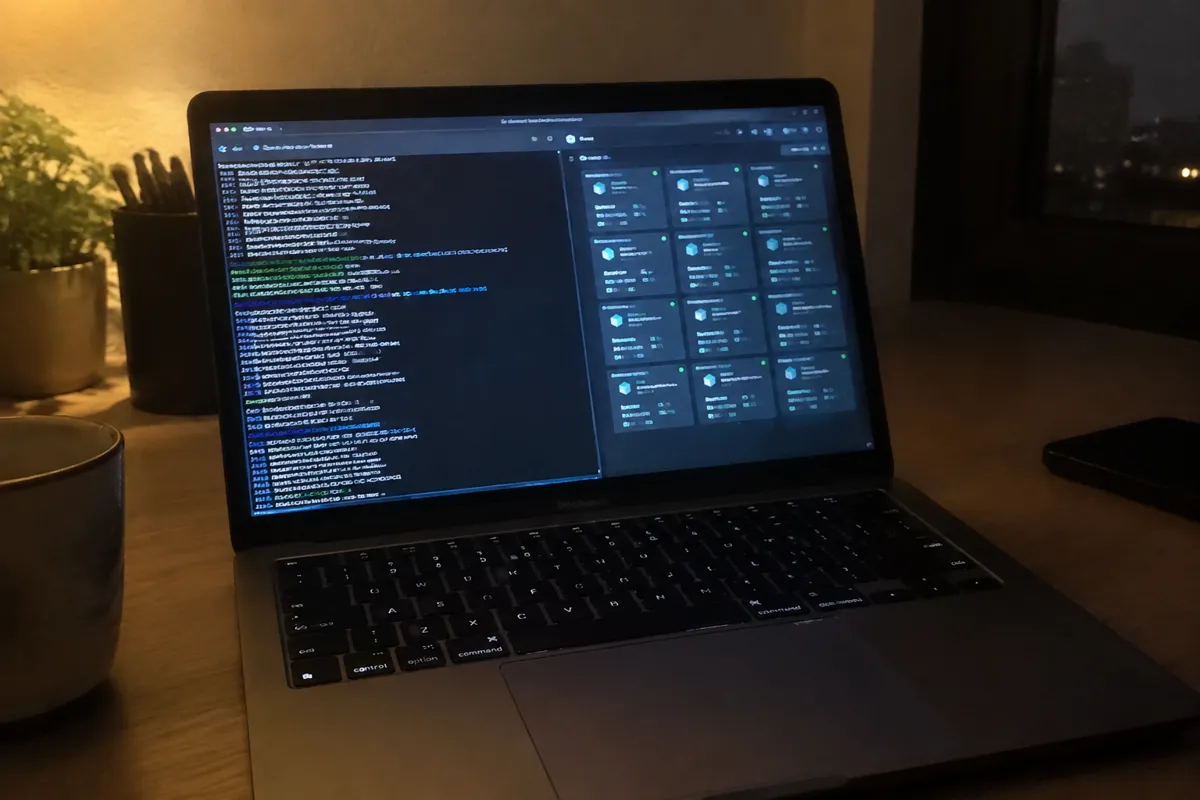
Docker sits above server virtualization but changes how the layers above it behave. A traditional VPS uses a hypervisor to create a full virtual machine, complete with its own operating system copy. Docker instead runs multiple isolated containers on top of a single host operating system, with each container sharing the host’s kernel but keeping its own filesystem, libraries, and processes separate. This makes containers dramatically lighter and faster to start than full virtual machines, which is why Docker has become central to how modern application hosting actually gets deployed.
How It Differs From Traditional Hosting
On traditional hosting, an application is installed directly onto a server’s operating system, alongside whatever else is configured there — a specific PHP version, specific system libraries, a specific web server setup. Move that application to a different server, and any mismatch in those details can break it. A Docker container packages all of that together, so the exact same container runs the same way on a developer’s laptop, a staging server, and a production host.
Alternatives to Docker: VPS, Virtual Machines, and Kubernetes
- Traditional VPS/dedicated deployment — installing software directly onto the server OS; simpler for a single application, but less portable.
- Full virtual machines — heavier isolation than containers, useful when a completely separate OS is genuinely needed.
- Managed Platform-as-a-Service (PaaS) — application hosting platforms that handle containerization behind the scenes, so the customer never manages Docker directly.
- Kubernetes — an orchestration layer built on top of container technology (often Docker) for running many containers across many servers at scale; overkill for most single-site hosting needs.
Trade-Offs
Docker’s biggest advantage, consistency across environments, comes with added complexity. Running Docker well requires understanding container images, networking between containers, and persistent storage, none of which a simple shared hosting control panel expects a customer to manage. It’s a clear win for developers deploying custom applications or microservices, but unnecessary overhead for a standard WordPress blog or brochure site that a traditional hosting stack already serves well.
Which Hosting Types Use Docker: VPS and Application Hosting
Docker support shows up mainly on VPS hosting and dedicated hosting plans aimed at developers, where root access allows installing and managing Docker directly. It also appears on application-hosting/PaaS platforms that use containers internally to deploy customer applications without exposing the underlying complexity. It’s uncommon, and largely unnecessary, on shared hosting, which is built around simpler, single-stack deployments rather than custom containerized environments.
Docker is one piece of the broader server infrastructure picture, sitting alongside the OS, web server, and networking layers.
A Concrete Example
A team builds an application with three separate pieces: a web front end, an API backend, and a database, each requiring different dependencies and library versions. Deployed traditionally, all three would need to coexist on the same server without conflicting, a real source of “it works on my machine” problems when moving from development to production. Packaged as three Docker containers instead, each piece carries its own isolated environment. The same set of containers can be started on a developer’s laptop for testing, then deployed unchanged to a VPS with Docker installed, with a strong guarantee that if it worked in one place, it will behave the same way in the other.

Common Misconception
It’s easy to assume Docker containers are just lightweight virtual machines, but the distinction matters in practice. A virtual machine virtualizes an entire operating system, including its own kernel, which is why VMs are heavier and slower to start. A Docker container shares the host machine’s kernel and only isolates the application layer above it, which is why containers start in seconds rather than minutes and use a fraction of the memory footprint of an equivalent VM. This is also why Docker isn’t a full substitute for virtualization in every case — workloads genuinely needing kernel-level isolation still call for a real virtual machine.
FAQ
Do I need Docker to host a website? No. Docker is aimed at developers deploying custom applications, APIs, or multi-service setups. A standard website or blog runs fine on traditional shared or managed hosting without it.
Is Docker the same as a VPS? No. A VPS is a virtualized server; Docker is a way of packaging and running applications, which can run on top of a VPS, a dedicated server, or a cloud platform.
Is Docker hosting more expensive? Not inherently — Docker itself is free and open-source. Cost differences usually come from needing a VPS or cloud plan with enough resources and root access to run it, rather than Docker itself.
Can Docker containers replace a full virtual machine? For most application-hosting purposes, yes, since containers share the host kernel and start faster. Full virtualization is still used when complete OS-level isolation is required.