Web Hosting Pricing Explained

Infrastructure Editor
Disclosure: Some links on this page are affiliate links — if you sign up through one, we may earn a commission at no extra cost to you. It never changes our ratings, rankings or verdicts: we don't sell hosting and take no pay-for-placement.
Who it's for
- First-time hosting buyers
- Anyone comparing plans across providers
- Small business owners setting a hosting budget
- People confused by intro-vs-renewal pricing
Every hosting quote is the output of a few pricing mechanics, and once you can see them you can read any pricing page, from any provider, without being steered by the biggest number on it. This page is about how those mechanics work. It deliberately does not list price ranges. For what plans typically cost by hosting type, see how much web hosting costs.
Mechanic One, The Billing Cycle
Hosts sell the same plan on several billing cycles: monthly, annual, and multi year. The per month rate falls as the cycle gets longer, because the provider collects cash up front and reduces the chance you leave. Two things follow from that.
First, a quoted monthly figure is meaningless until you know which cycle it assumes. A number shown as “per month” on a three year cycle is not a monthly price; it is a three year invoice divided by thirty six.
Second, the cycle controls when the next price event happens. A monthly plan reprices every month, a three year plan reprices once, three years out. Longer cycles trade flexibility for a lower rate, which is a good deal only if you are confident in the host. A money back guarantee is what offsets that risk, and it is worth reading before you pick a long cycle.
Mechanic Two, Intro Discount and Renewal Reset
Many plans carry a promotional rate for the first cycle only. When that cycle ends, the plan reprices to its standard rate, and the reset applies to the whole next cycle, not gradually. The mechanics to check are: which cycle the discount applies to, whether the renewal rate is published on the pricing page or only in the terms, and whether renewing on a shorter cycle changes the rate. Because the reset happens once per cycle, a long first cycle delays the reset rather than avoiding it.
This page only covers how the reset works. For the dollar side and how to budget for it, go to hosting renewal pricing traps.
Mechanic Three, Flat Bundle Versus Metered Resources
Hosting is priced on two different logics, and mixing them up is a common source of confusion.

- Flat bundle. Shared and most managed WordPress plans sell a fixed package for a fixed fee. The limits are real but soft, often expressed as fair use policies and account level caps on CPU, processes and inodes rather than a meter. You pay the same whether you use little or a lot of the bundle.
- Per resource. VPS, cloud and dedicated plans price the resources themselves: a slice of CPU, RAM, storage and transfer. Some cloud products go further and meter usage by the hour or by the unit of transfer, so the bill tracks what you use.
Flat bundles are predictable but make you pay for headroom you may never use. Metered and resource based plans match cost to load, but can produce a variable bill if traffic spikes. Neither is cheaper by nature. They are different questions, which is why comparing a shared plan and a cloud plan by headline price alone does not work. See shared vs cloud hosting for how the two differ in practice.
Mechanic Four, The Tier Ladder
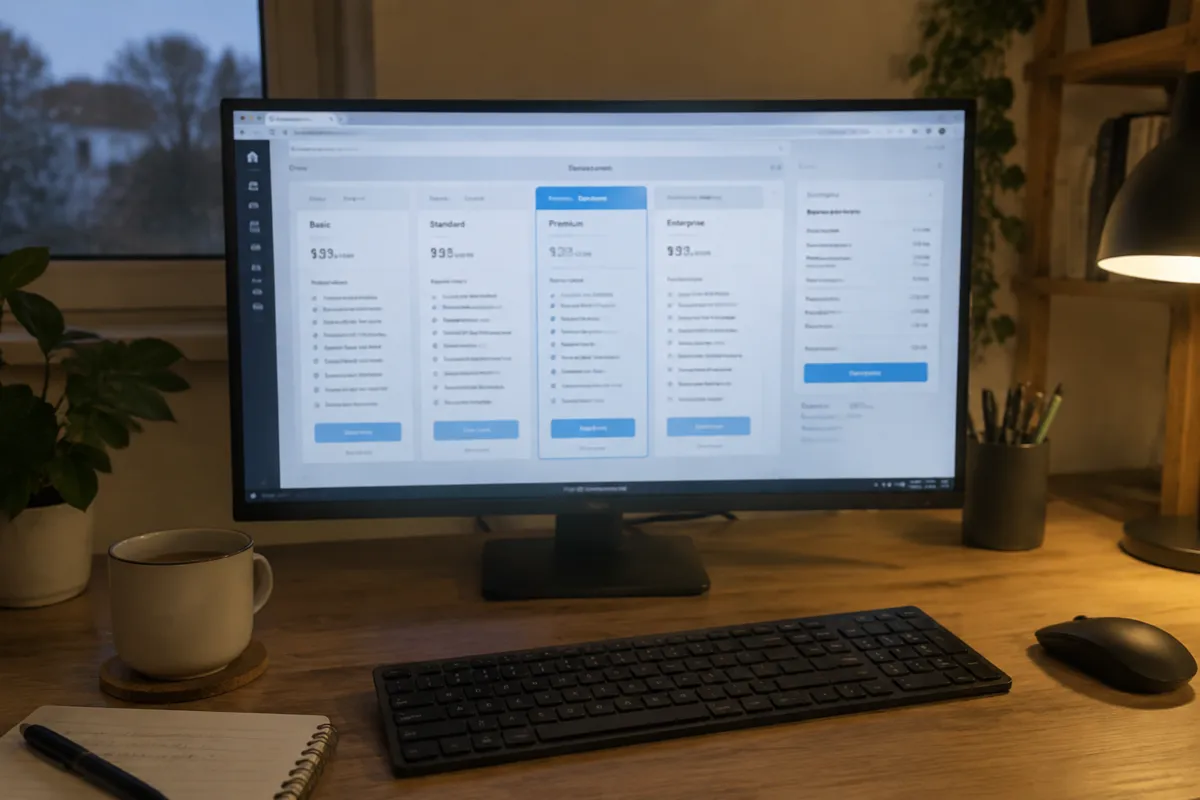
Most hosts publish three or four tiers with resources and price rising at each step. The middle tier is usually the one highlighted as most popular, and the gaps are set so that it looks like the obvious choice. The ladder is a steering device, not a measurement of your needs. Decide what your site requires from the features checklist first, then read the tier table to find the lowest tier that covers it.
Mechanic Five, Add Ons and Bundled Extras
The base plan rarely includes everything a working site needs. Domain registration, SSL beyond the basic certificate, daily backups, extra mailboxes, staging and dedicated IPs may be priced as separate line items. Some are bundled free for the first cycle and billed afterwards, which means they also participate in the renewal reset. When comparing two quotes, list what each includes at that tier, and price any missing items on the same cycle.

A Reading Order for Any Pricing Page
- Find the billing cycle the headline price assumes.
- Find whether the price is an intro rate, and what the standard rate is.
- Identify whether the plan is a flat bundle or priced per resource.
- List what is included at that tier and what is an add on.
- Read the refund terms, since they price in your risk of choosing wrong.
- Only then compare to another provider, cycle for cycle.
For the decision that comes before pricing, see how to choose web hosting.
FAQ About Web Hosting Pricing Models
Why do two plans that look identical have different prices? Because the price reflects the mechanics as well as the resources: the billing cycle, whether an intro discount is applied, which add ons are bundled, and the support level. Compare on specifics rather than tier names.
Is paying monthly or annually better? Monthly keeps your exposure low if the host turns out to be a poor fit. Longer cycles lower the rate but commit you, and push the renewal reset further out. Pick based on how sure you are of the provider.
Is metered pricing cheaper than a flat plan? Not automatically. Metered pricing tracks usage, so it can be cheaper for light or uneven loads and more expensive when traffic is sustained. A flat plan is easier to budget.
Where do I find actual price ranges? On the web hosting cost page, which covers typical costs by hosting type and total cost of ownership.