What Is a Domain Name?

Infrastructure Editor
Disclosure: Some links on this page are affiliate links — if you sign up through one, we may earn a commission at no extra cost to you. It never changes our ratings, rankings or verdicts: we don't sell hosting and take no pay-for-placement.
Who it's for
- First-time website owners
- Small business owners buying their first domain
- Students learning web infrastructure basics
By Marcus Feld, Infrastructure Editor (former data-center systems engineer)
What Is a Domain Name? A Plain Definition
A domain name is the readable web address people type into a browser to reach a specific website, such as example.com. It exists because the internet’s underlying addressing system relies on numeric IP addresses, which are effectively impossible for most people to memorize. A domain name gives a website a stable, human-friendly name that can be advertised, remembered, and typed. Meanwhile, DNS quietly handles the translation to the numeric address behind the scenes.
The Analogy: A Business Name vs the Building It Operates From
A domain name works like a business’s name on its shopfront sign. “Sweet Crumb Bakery” is a name customers remember and look for. It’s distinct from the actual building, staff, and equipment that make the bakery function. In web terms, the domain name is the sign; the hosting account is the building, complete with the server that stores everything the business actually needs to operate. A domain name by itself has no content, no server, and no ability to display anything. It is purely a label, waiting to be connected to something behind it.
How a Domain Name Connects to Hosting
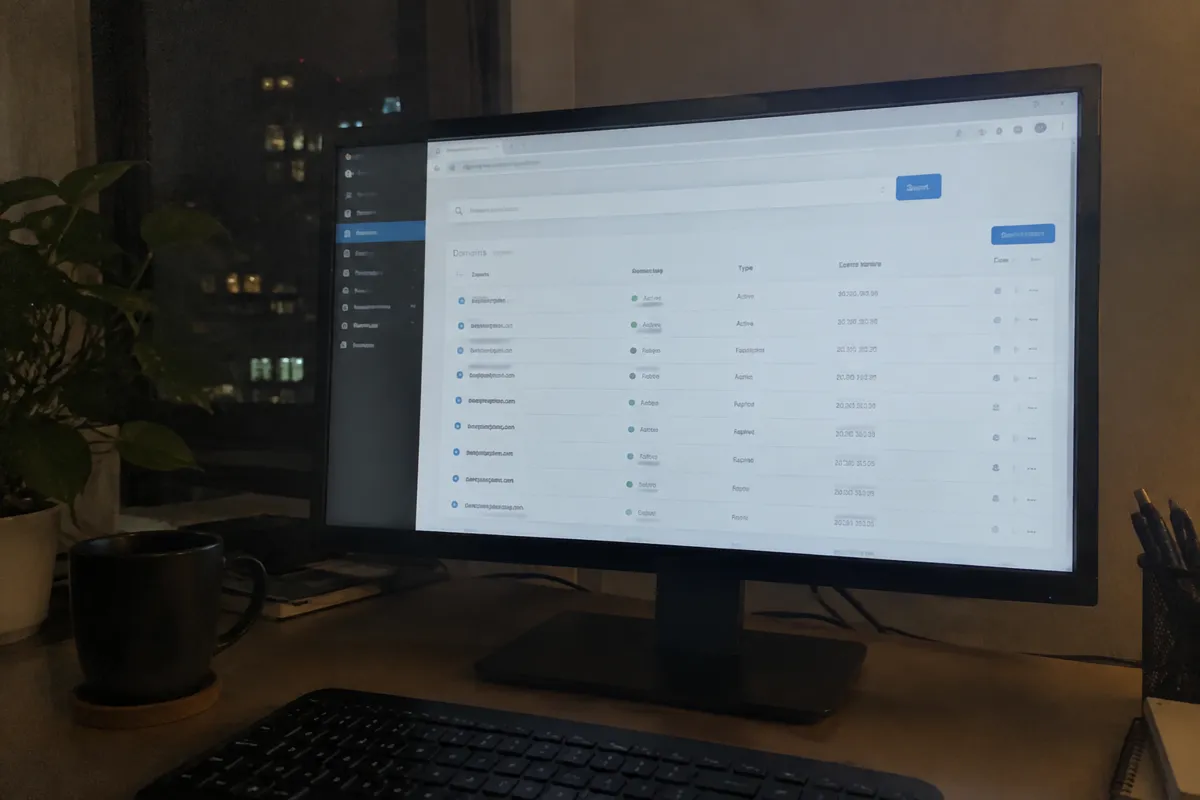
A domain name and a hosting account are bought as two separate services, often from two separate companies, and then linked together through DNS. Buying a domain name registers exclusive rights to use that name for a set period, typically a year at a time, through a domain registrar. It does not automatically include any server space to store a website’s files — that’s what hosting provides. To make the two work together, the domain owner updates the domain’s DNS settings to point at the hosting provider’s server. This process is covered fully in pointing a domain to hosting. The distinction between the two, and why people frequently mix them up, is explained thoroughly in domain vs hosting.
The Structure of a Domain Name
A domain name has two core parts: the name itself and the top-level domain, or TLD, that follows it. In example.com, “example” is the chosen name and “.com” is the TLD. TLDs come in different categories. There are generic ones like .com, .org, and .net, country-specific ones like .au or .uk, and newer specialized ones like .io or .shop. The choice of TLD can affect a domain’s perceived trustworthiness, availability, and sometimes its price. A full breakdown of TLD categories and how to choose between them lives in what a TLD is.
Related Terms
Registrar
The company a domain name is purchased and managed through.
DNS
The system that connects a domain name to a hosting server’s IP address.

Subdomain
An extension of a domain, like blog.example.com, used to organize sections of a site.
WHOIS
The public record system showing who registered a given domain name.
A Concrete Example
An aspiring entrepreneur wants to launch a site for a new coffee subscription business. She searches a domain registrar and finds brewedbyus.com available for about $14 a year. She registers it, which secures her exclusive right to use that name for the coming year. At this point, typing brewedbyus.com into a browser returns nothing useful — there’s no hosting account behind it yet. She then signs up for a hosting plan, uploads her site’s files, and updates the domain’s DNS settings to point at her new hosting server’s IP address. Only after both steps are complete does visiting brewedbyus.com actually load her site. Registering the domain alone, without hosting, would have left the sign up with nothing behind it.

Common Misconception
The most common misconception is assuming a domain name purchase automatically includes a working website. A related error is assuming a domain and a hosting account are the same product, bought once. Many people are surprised to learn a paid, active domain registration can point to an empty or expired hosting account and show an error. A domain can also be registered for years without ever being connected to any hosting at all. A second common mix-up is assuming a domain name must be bought from the same company providing hosting. In reality, registrars and hosting providers are frequently different businesses, and many experienced website owners deliberately keep them separate for flexibility.
FAQ
How much does a domain name typically cost?
Most common TLDs like .com cost roughly $10 to $20 a year. Prices vary by registrar and by which TLD is chosen. Some newer or premium TLDs cost significantly more.
Can I change my domain name after my website is already live? Yes, but it requires registering a new domain and redirecting or migrating traffic from the old one. A domain name itself cannot simply be renamed like a file. This is covered in the migration guides for switching a site’s public address.
Do I lose my website if I forget to renew my domain? Yes, effectively. If a domain registration lapses, DNS stops resolving that name to the hosting server. Visitors typing the domain will see an error, even if the hosting account itself is still active and fully paid.
Is a subdomain a separate domain name?
No. A subdomain is a subdivision of an existing registered domain, like shop.example.com, and doesn’t need to be registered or renewed separately from the main domain it belongs to.