Colocation Hosting

Infrastructure Editor
Disclosure: Some links on this page are affiliate links — if you sign up through one, we may earn a commission at no extra cost to you. It never changes our ratings, rankings or verdicts: we don't sell hosting and take no pay-for-placement.
Who it's for
- Enterprises with existing hardware
- Regulated industries
- Organizations with unusual hardware needs
- IT teams with hands-on data-center capability
Colocation hosting inverts the standard hosting relationship: instead of renting a server from a provider, the customer owns the physical hardware outright and pays a data center only for the space, power, cooling, and network connection to house it. It’s one of the types of web hosting built around hardware ownership rather than a rental relationship.
What Colocation Hosting Is
Colocation is a data-center service where the customer supplies their own server hardware — purchased, configured, and owned by the customer — and the data center provides the facility: rack space, redundant power, cooling, physical security, and network connectivity. The data center doesn’t own or control what runs on the machine. Its role is purely to house and connect hardware that belongs to someone else.
How Colocation Hosting Works
The customer purchases and configures a physical server, or servers, to their own specification, then ships or delivers that hardware to the chosen data-center facility. Data-center staff rack the equipment and connect power and network cabling. The customer’s server becomes reachable over the internet through the facility’s network infrastructure. From that point, the customer manages the server remotely via the same tools used for any dedicated server — SSH, remote management interfaces, and so on. The data center handles only the physical environment, not the software or OS. Physical hardware changes or repairs typically require either a site visit by the customer’s own staff or a paid “remote hands” service from the data center.
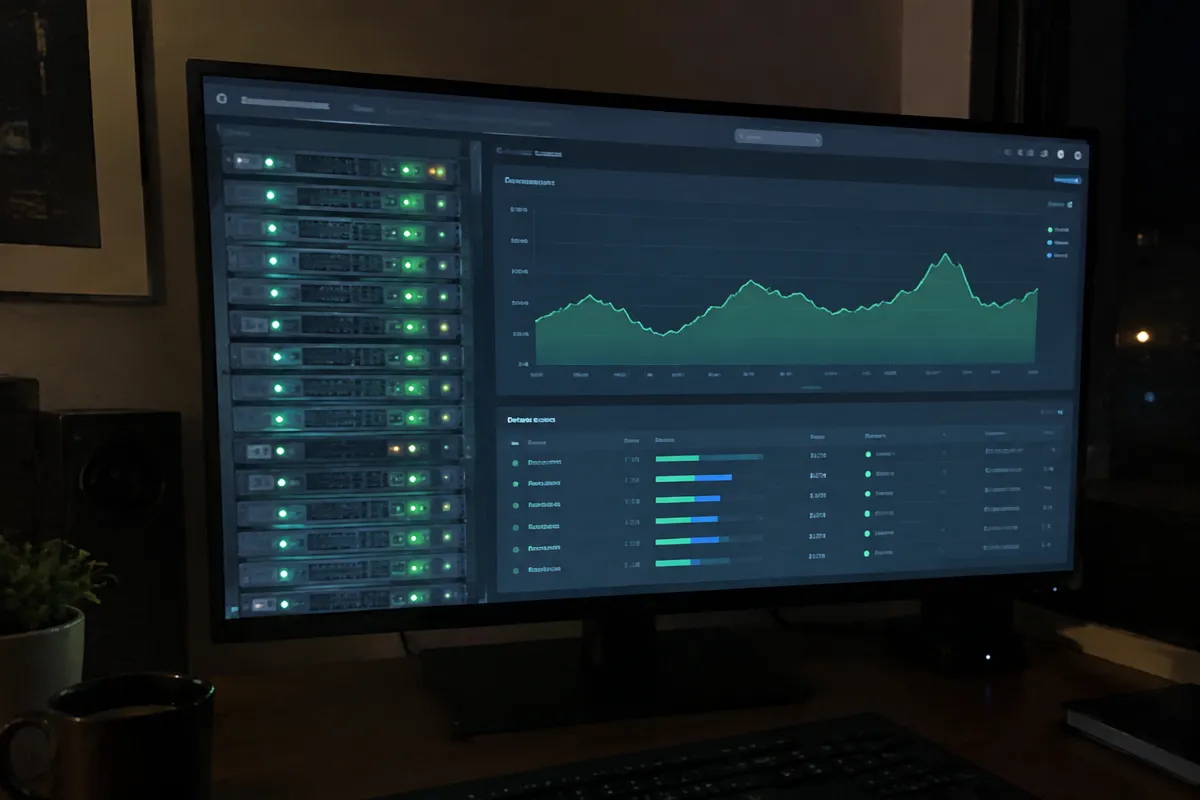
Colocation Hosting Resource Isolation
Isolation under colocation is total, in the most literal sense: it’s the customer’s own physical machine, with no other tenant touching that hardware at all. What’s shared is only the facility itself — the building, the power infrastructure, the network backbone, and the physical security. The performance ceiling is defined entirely by whatever hardware the customer chose to install, not by anything the data center provides or restricts.
Colocation Hosting Price and Cost
Colocation pricing starts around $100 a month for a single rack unit of space, power, and bandwidth. It rises with more rack units, higher power draw, or premium network connectivity for larger deployments — sometimes into the thousands of dollars a month. Crucially, that ongoing facility fee is separate from, and on top of, the hardware’s own purchase cost. The customer pays that cost upfront and owns it as a capital asset rather than a recurring operating expense.
Colocation Hosting Performance Ceiling
The performance ceiling matches whatever hardware the customer installs, with no cap imposed by the data center beyond the power and network capacity contracted for that rack space. A customer who installs high-end hardware gets high-end performance. A customer with older or lower-spec equipment is limited by that choice, not by any provider policy. This makes colocation the one hosting type where the performance ceiling is entirely a customer decision rather than a provider offering.
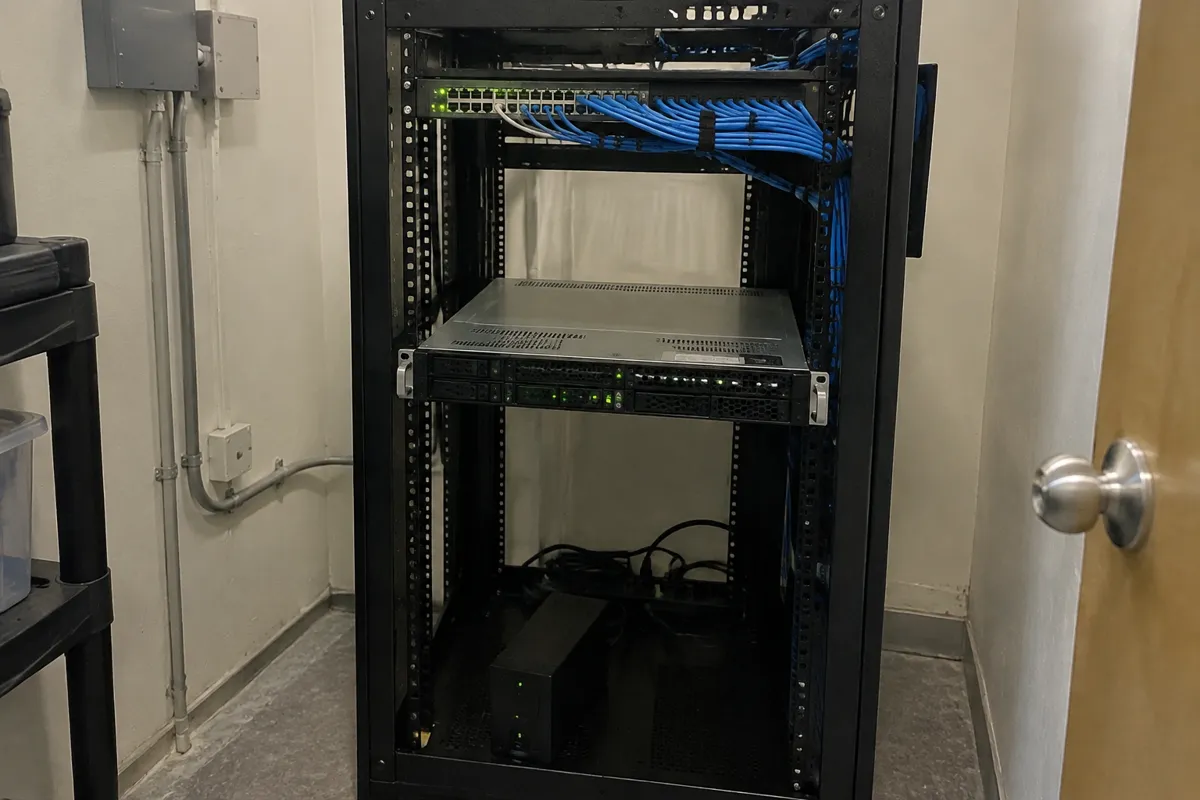
Who Colocation Hosting Suits
Colocation suits organizations that already own server hardware and want to place it in a professionally managed facility rather than an in-house server room. It suits businesses subject to compliance rules that specifically require physical ownership or control of hardware assets, which some regulated industries mandate in ways that a rented dedicated server can’t satisfy. It also suits workloads with unusual hardware requirements — custom-built machines, specific chip architectures, or configurations a standard dedicated-server catalog doesn’t offer.
Colocation Hosting Limitations
The upfront capital cost of purchasing hardware is the most significant barrier, especially compared to renting equivalent capacity through dedicated hosting. Colocation also requires staff capable of maintaining or physically replacing hardware components, whether that’s an in-house team able to travel to the facility or a budget for the data center’s paid remote-hands services. Hardware failures take longer to resolve than on a rented dedicated server, where the provider typically swaps failed components as part of the service.
Colocation Hosting Upgrade Path
Colocation doesn’t have a typical “upgrade” in the tiered sense of other hosting types — growth usually means purchasing and racking additional hardware, or upgrading the existing machine’s components directly. Organizations that decide hardware ownership isn’t worth the operational overhead often move to dedicated hosting instead, renting equivalent capacity without the capital cost or maintenance burden — see colocation vs dedicated hosting for that direct trade-off. Server location also becomes a strategic decision at this level, since colocation facilities are chosen deliberately for network peering, latency, or jurisdictional reasons — see what is a data center for the facility-level concepts that matter most when selecting one.

FAQ
Is colocation cheaper than dedicated hosting? Not usually, once the hardware’s full cost is factored in — colocation requires a large upfront capital purchase that dedicated hosting avoids entirely. Colocation becomes more cost-effective mainly at scale, or when hardware ownership itself is a business or compliance requirement rather than purely a cost decision.
Who fixes a colocated server if it breaks? Responsibility for hardware repair sits with the customer, since they own the equipment. Most data centers offer paid “remote hands” services to perform physical tasks — swapping a drive, rebooting a machine — on the customer’s behalf, but the customer typically sources and owns the replacement parts.
Do I need my own network setup for colocation? No — the data center provides the network connectivity, power, and physical infrastructure. The customer is responsible for the server hardware and everything running on it, not the building’s utilities or network backbone.
Is colocation still relevant with cloud hosting available? Yes, in specific cases — particularly where hardware ownership is a genuine requirement, existing capital equipment needs a home, or workloads have hardware specs that don’t map cleanly onto standard cloud instance types.
For the broader hosting taxonomy this fits inside, see types of web hosting.