How to Migrate Email Hosting

WordPress & Managed Editor
Disclosure: Some links on this page are affiliate links — if you sign up through one, we may earn a commission at no extra cost to you. It never changes our ratings, rankings or verdicts: we don't sell hosting and take no pay-for-placement.
Who it's for
- Website owners switching hosts
- Small business owners managing company email
- Developers migrating client infrastructure
- Agencies handling client email accounts
By Elena Novak, WordPress & Managed Editor
Why Email Migration Needs Its Own Process
Migrating email hosting is often bundled into a website migration, but the two follow different rules. A website migration risk is visible — the site is either up or down. An email migration risk is silent: a message sent during a mismanaged cutover can simply vanish. Neither sender nor recipient is any wiser until someone follows up days later. That asymmetry is why email migration deserves its own careful sequence, separate from the file-and-database transfer covered in how to migrate a website.
Step-by-Step: How to Migrate Email Hosting
- Inventory every mailbox that needs to move — addresses, current storage usage, and any forwarding rules or filters configured on each account.
- Create matching mailboxes on the new host before touching any DNS records, using how to create a hosting email account as the setup reference.
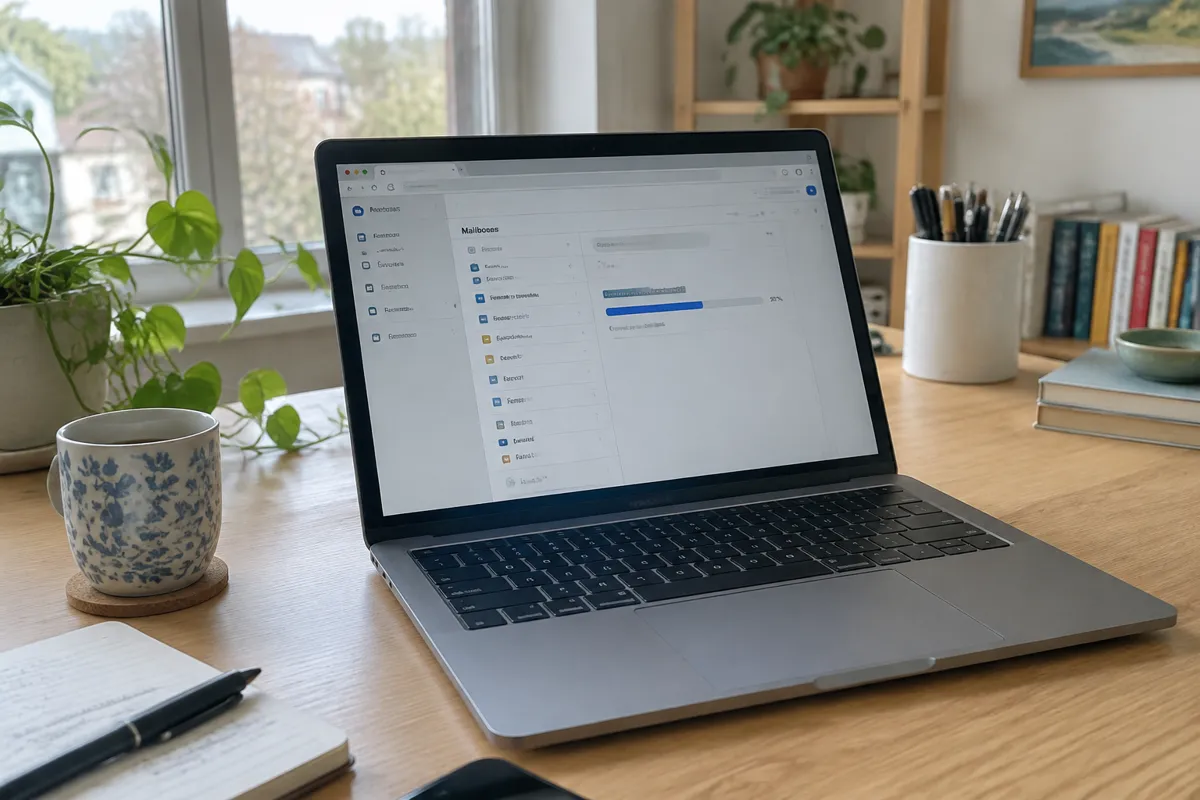
- Transfer existing mail using an IMAP-to-IMAP migration tool — built into most control panels, or a dedicated tool like imapsync. This copies existing messages into the new mailboxes without needing to touch MX records yet.
- Verify the transferred mail by spot-checking folder structure, message counts, and that attachments came across intact.
- Lower the MX record’s TTL 24–48 hours in advance to shorten propagation time on cutover day.
- Update MX records to point at the new mail host once the mailboxes are populated and verified.
- Keep the old mailboxes accessible (without deleting them) for at least a week after cutover. DNS propagation means some senders’ mail servers may still route to the old host briefly during the transition.
- Send and receive test messages from external addresses (Gmail, another domain) to confirm delivery both ways on the new host.
Understanding MX Records and Mail Routing
The MX record tells the wider internet’s mail servers where to deliver mail for your domain. It’s a separate DNS record from the one that points your website to its host. See DNS record types and specifically what an MX record is for how that routing works. Changing the MX record redirects new incoming mail, but it does nothing for messages already sitting in the old mailboxes. That’s why the IMAP transfer step has to happen first, not as a follow-up.

Avoiding Lost Mail During the Transition
The overlap window — keeping the old mail server reachable while the new one comes online — is what prevents lost messages. MX propagation isn’t instant, so some senders’ servers will keep delivering to the old host for a period after the record changes. If that mailbox is deleted or the old hosting account cancelled too soon, that mail simply bounces or disappears. Treat the old mail hosting the same way you’d treat old website hosting during a migration. Leave it running, untouched, for at least a week past cutover.
Handling Common Complications
If the domain uses a third-party email service, like Google Workspace or Microsoft 365, rather than mail hosted directly with the web host, the MX records point there instead. This migration process then runs independently of any website hosting change. Confirm which situation applies before starting. Check the domain’s current MX records to see whether mail is even hosted with the same provider as the website.

How to Migrate Email Hosting FAQ
Do I need to migrate email hosting at the same time as my website? No. They’re independent services tied together only by DNS records, and can move on separate timelines without issue.
Will I lose old emails during migration? Not if you transfer existing mailboxes via an IMAP migration tool before changing MX records, and keep the old mailboxes accessible for a week or two after cutover as a safety net.
How long does email propagation take after changing MX records? Similar to other DNS changes, typically a few hours up to 48 hours depending on caching. Lowering the TTL a day or two before cutover shortens this window.
What happens to email sent during the propagation window? It may route to either the old or new mail server depending on which DNS record a given sender’s mail server has cached. This is exactly why the old mailboxes need to stay live and monitored during that window.
Can I migrate email hosting without technical help? For a handful of mailboxes, yes, using a control-panel migration tool or IMAP sync utility. Larger mailbox counts or complex filtering rules benefit from developer support to avoid missed configuration.